Hello, could you introduce yourself?
Hello, I’m Minhee Jung, an artist based in Seoul.
My paintings explore nature within the city, particularly parks, through abstract expressions of the sense of calm and the inner landscapes I experience in those spaces. The deeply personal emotions we discover in familiar urban settings, along with the possibilities for healing and connection they offer, are central themes in my work.
What was your life like before you became an artist?
Once I decided to study painting, I don’t think I ever seriously considered a life outside of art. Throughout college, I was constantly asking myself, “What stories do I have to tell?” and “How can I express them through my work?” Then, in my early thirties, various practical challenges led me to take a company job, where I worked for two and a half years. Even then, I saw it less as giving up my art practice and more as putting it on hold. I wanted to experience a different way of life, with the intention of eventually returning to my work.
Working at a company made one thing even clearer: I’m someone who ultimately wants to create something through art and share it with the world. That realization brought me back to a life devoted to my practice. Looking back, I think that experience also helped me become more grounded and resilient.
What led you to begin the work you’re making today?
During the period when I had stepped away from art and was working at a company, I felt a deep longing to create. Parks were the only places where I could truly catch my breath. I often spent time in a small park near my workplace. After leaving my job, during the pandemic, I went to the parks along Seoul’s Han River almost every day, giving myself time to recover and reconnect with myself.
Over time, parks naturally became a central subject in my work. Walking through a park in the city became a kind of emotional refuge. The vitality I sensed in even a single tree or a small patch of grass encountered in everyday life always felt fresh and profound. Those sensations became the starting point for my work. In particular, my personal desire to find a “safe place” was what ultimately led me to the exploration I’m now pursuing through painting.
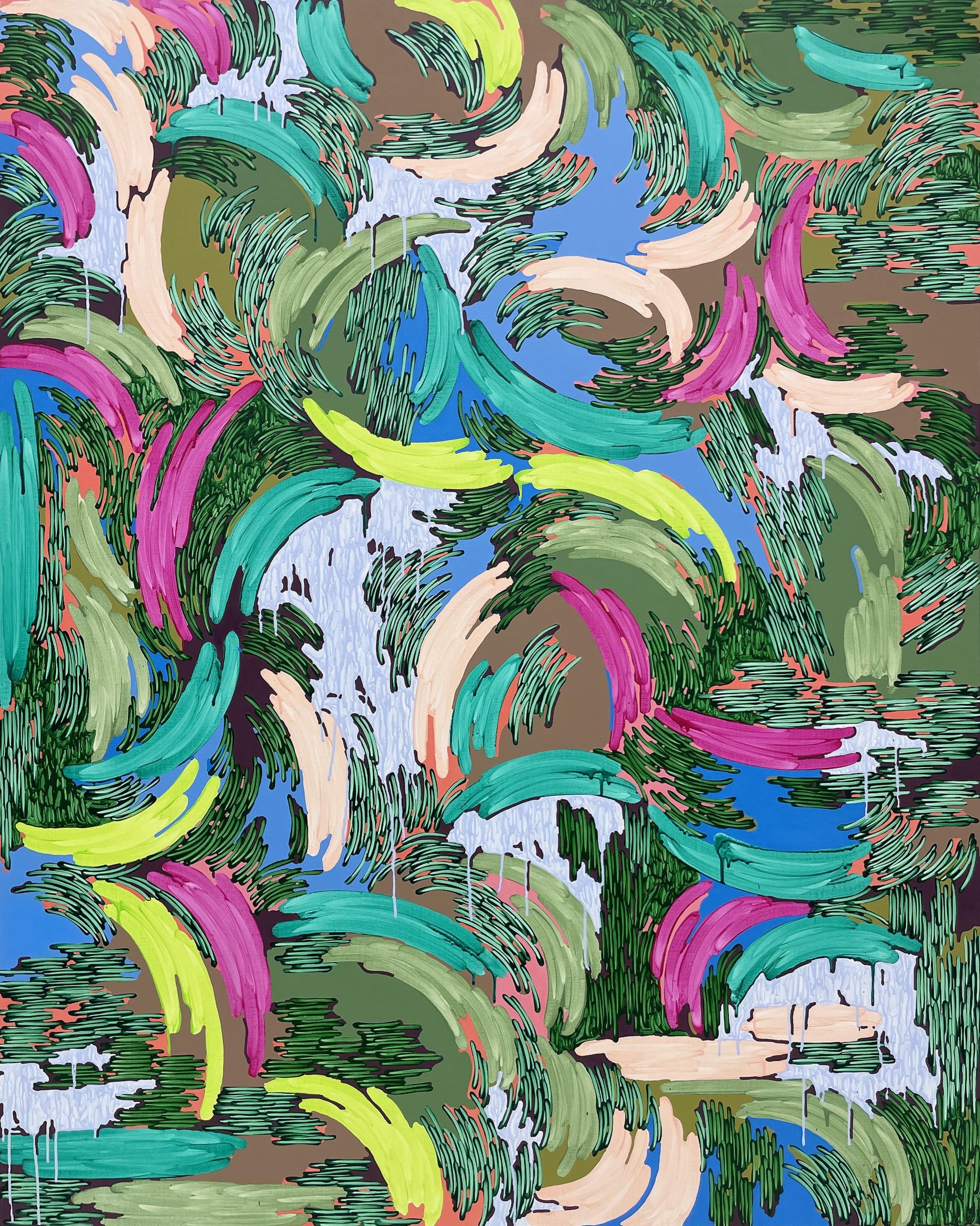
Urban forest #8_acrylic on canvas_162.2x130.3cm_2025
You’ve shown your work in several countries this year, in 2025. Is there a memorable experience you’d like to share?
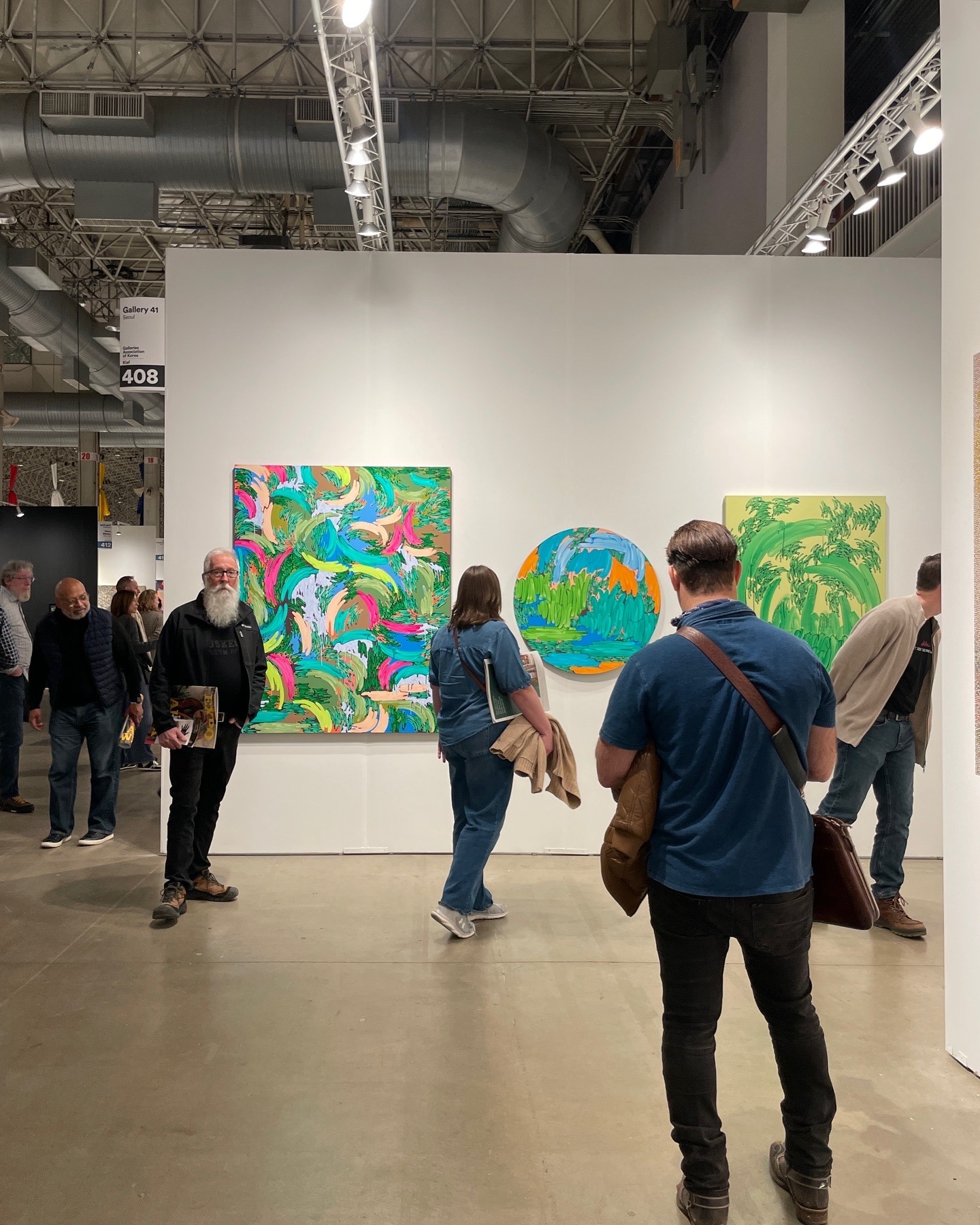
2025 has been a truly special year for me. I participated in Art Central in Hong Kong in March and EXPO CHICAGO in April, showing my work internationally for the first time. What stayed with me most was the experience of speaking with visitors in person.
Despite our different languages, I could feel that my work was connecting with people through emotion. Experiencing that firsthand gave me greater confidence in the direction of my practice.
If you weren’t living as an artist today, what do you think you would be doing? Are there any new things you’d like to try, or other ways of living you’d like to explore?
I think I would have chosen to become an artist eventually, whatever my circumstances. It took a full five years from the time I left my company job to the point when I resumed my art practice. Now that I’m making work again, it may sound easy to talk about, but those years were incredibly difficult. My biggest challenge was finding a way to keep myself going.
Through that process, I came to understand deeply that making art is something I simply have to do. Since then, I’ve lived with my practice firmly at the center of my life.
I want to be in my studio painting until the very end of my life. That’s the life I hope for. Although painting is my primary focus now, I’d like to explore other materials and mediums and find more ways to express myself. Even if the form of my work changes, I want to continue developing the way I see the world through it.
You mentioned that you’ve worked with installation art, which stayed with us.
Do you have any plans to return to it?
My graduate degree was in painting, but during that time, I was actually making installation work regularly. The ideas behind it were similar to those in my current practice, though I was particularly interested in the spaces we inhabit. My own living situation changed frequently during that period, and I think that naturally led me to make installations that could shift and adapt.
After the five-year break from my practice, I returned to painting, but my interest in installation—and my desire to explore it further—has never gone away.
If possible, I’d like to experiment with a new form of installation for my solo exhibition scheduled for the end of this year. Nothing is firmly decided yet, though, so I’m still considering a range of possibilities.
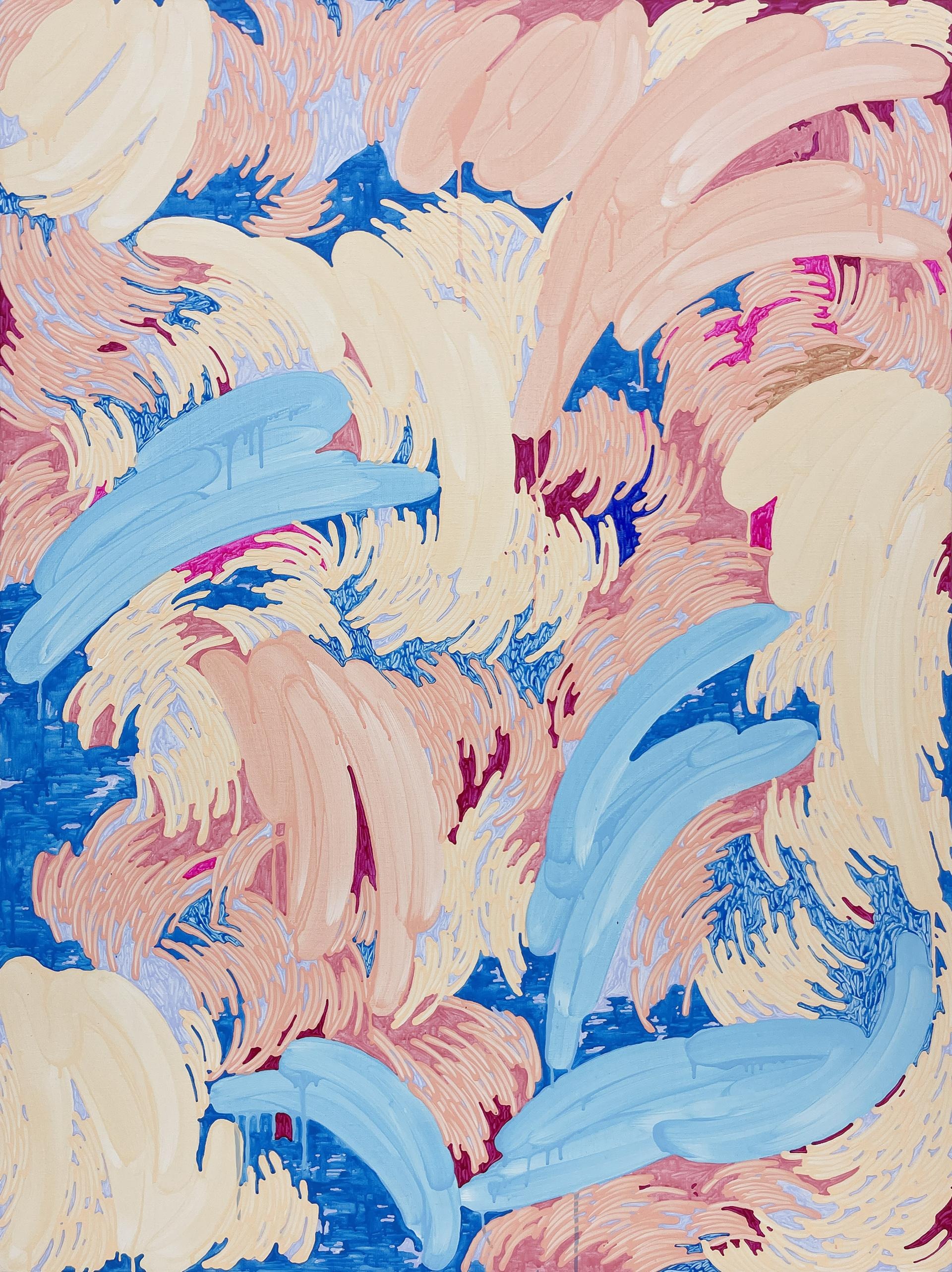
Turbulent Calm_acrylic on canvas_130.3x97cm_2025
Was there anything about working with DIVE IN that felt different from your usual practice, or challenged you in a new way?
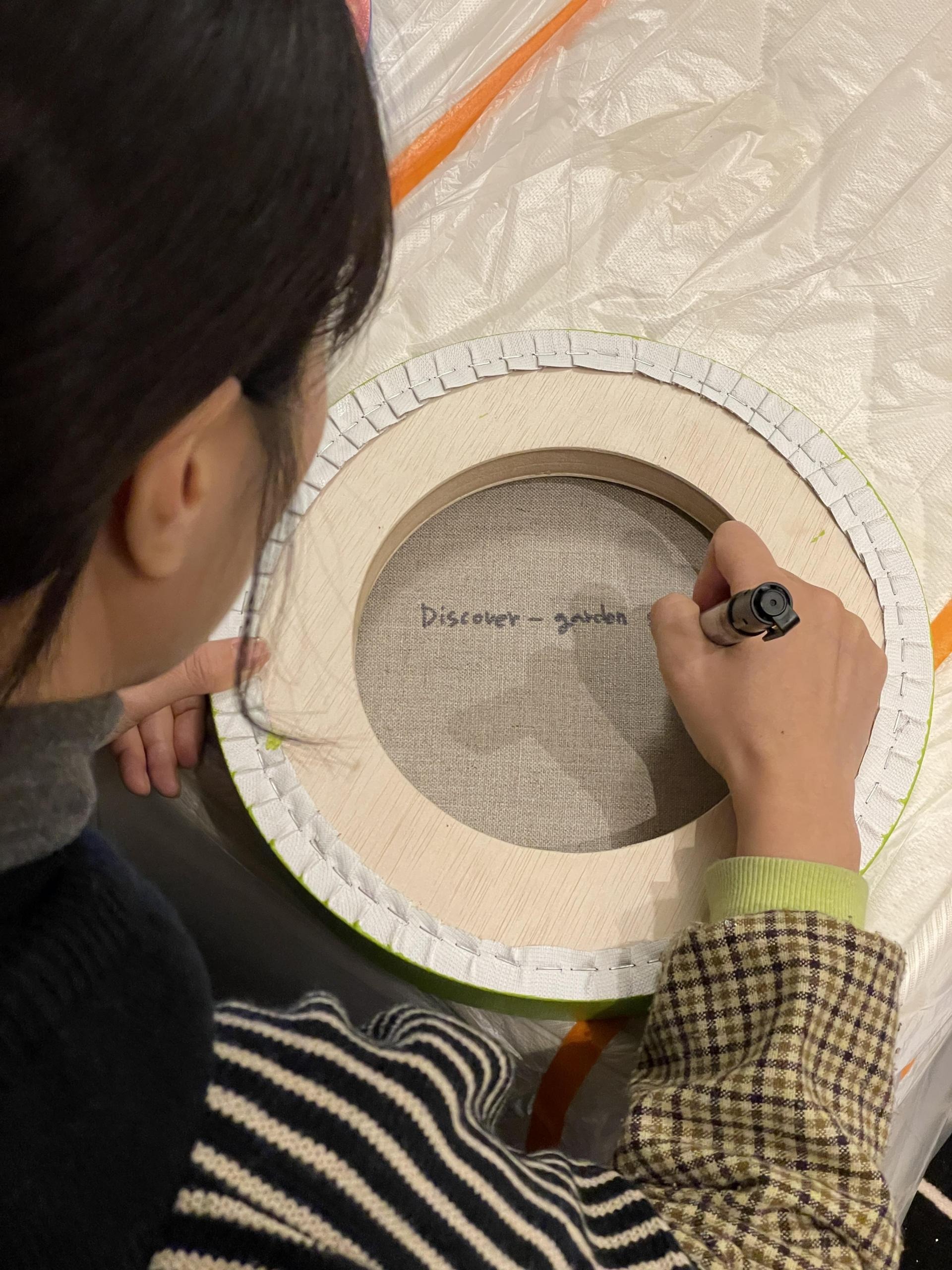
The DIVE IN Art Stay project at Adonis Hotel felt closely connected to my earlier work, so participating felt like a natural step. I was especially interested in the nature of a hotel as a space. It’s open to anyone, yet it can become intensely private in an instant. I found that quality compelling, and painting directly within such a space was an exciting experience in itself.
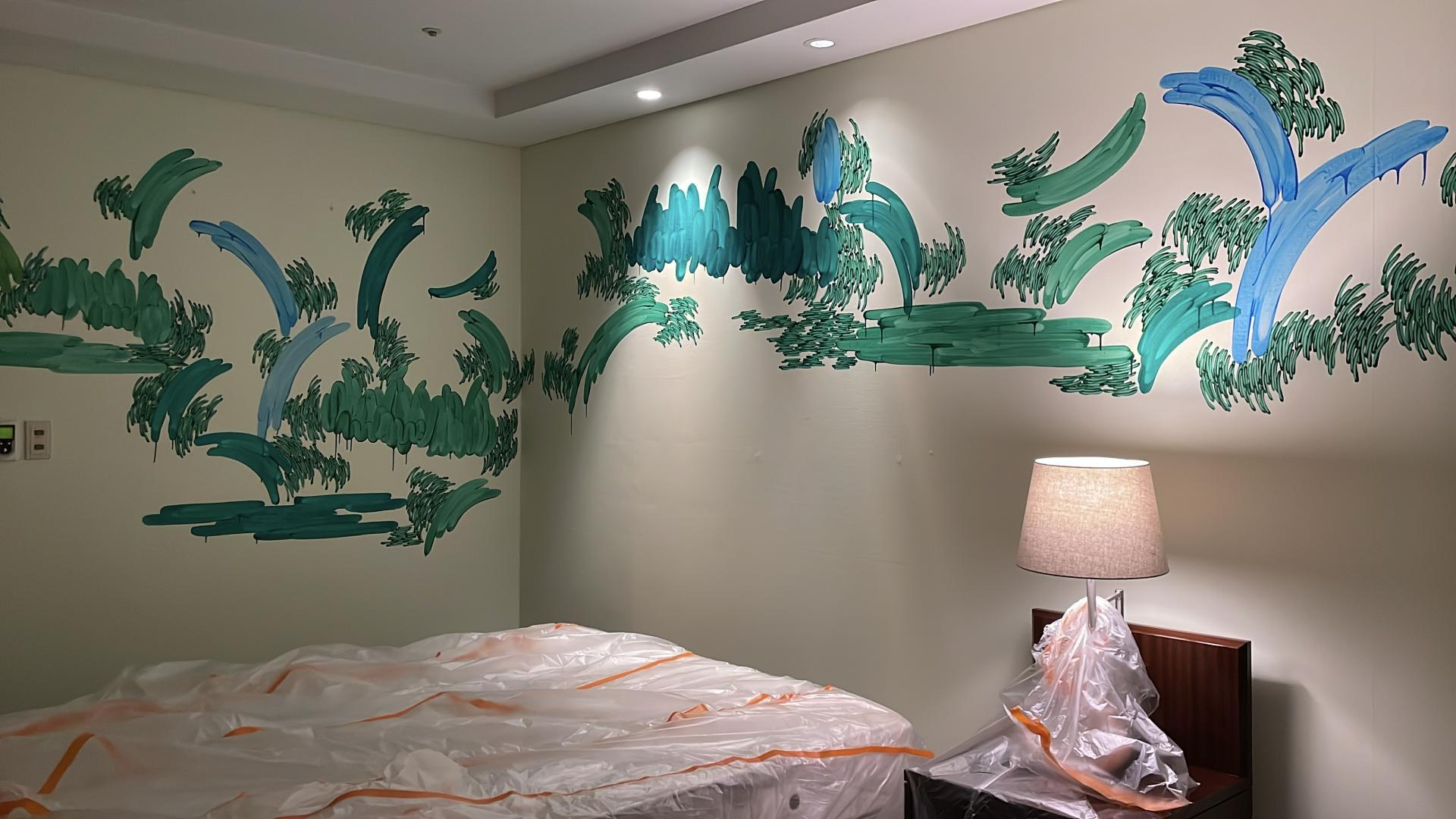
Since I usually work within the defined boundaries of a canvas, extending my work across a much larger physical space was both a challenge and a fresh source of inspiration. It prompted me to think more deeply about how painting and space can come together. It was also a valuable opportunity to reconsider how my practice might expand in the future.


Hello, could you introduce yourself?
Hello, I’m Minhee Jung, an artist based in Seoul.
My paintings explore nature within the city, particularly parks, through abstract expressions of the sense of calm and the inner landscapes I experience in those spaces. The deeply personal emotions we discover in familiar urban settings, along with the possibilities for healing and connection they offer, are central themes in my work.
What was your life like before you became an artist?
Once I decided to study painting, I don’t think I ever seriously considered a life outside of art. Throughout college, I was constantly asking myself, “What stories do I have to tell?” and “How can I express them through my work?” Then, in my early thirties, various practical challenges led me to take a company job, where I worked for two and a half years. Even then, I saw it less as giving up my art practice and more as putting it on hold. I wanted to experience a different way of life, with the intention of eventually returning to my work.
Working at a company made one thing even clearer: I’m someone who ultimately wants to create something through art and share it with the world. That realization brought me back to a life devoted to my practice. Looking back, I think that experience also helped me become more grounded and resilient.
What led you to begin the work you’re making today?
During the period when I had stepped away from art and was working at a company, I felt a deep longing to create. Parks were the only places where I could truly catch my breath. I often spent time in a small park near my workplace. After leaving my job, during the pandemic, I went to the parks along Seoul’s Han River almost every day, giving myself time to recover and reconnect with myself.
Over time, parks naturally became a central subject in my work. Walking through a park in the city became a kind of emotional refuge. The vitality I sensed in even a single tree or a small patch of grass encountered in everyday life always felt fresh and profound. Those sensations became the starting point for my work. In particular, my personal desire to find a “safe place” was what ultimately led me to the exploration I’m now pursuing through painting.
Urban forest #8_acrylic on canvas_162.2x130.3cm_2025
You’ve shown your work in several countries this year, in 2025. Is there a memorable experience you’d like to share?
2025 has been a truly special year for me. I participated in Art Central in Hong Kong in March and EXPO CHICAGO in April, showing my work internationally for the first time. What stayed with me most was the experience of speaking with visitors in person.
Despite our different languages, I could feel that my work was connecting with people through emotion. Experiencing that firsthand gave me greater confidence in the direction of my practice.
If you weren’t living as an artist today, what do you think you would be doing? Are there any new things you’d like to try, or other ways of living you’d like to explore?
I think I would have chosen to become an artist eventually, whatever my circumstances. It took a full five years from the time I left my company job to the point when I resumed my art practice. Now that I’m making work again, it may sound easy to talk about, but those years were incredibly difficult. My biggest challenge was finding a way to keep myself going.
Through that process, I came to understand deeply that making art is something I simply have to do. Since then, I’ve lived with my practice firmly at the center of my life.
I want to be in my studio painting until the very end of my life. That’s the life I hope for. Although painting is my primary focus now, I’d like to explore other materials and mediums and find more ways to express myself. Even if the form of my work changes, I want to continue developing the way I see the world through it.
You mentioned that you’ve worked with installation art, which stayed with us.
Do you have any plans to return to it?
My graduate degree was in painting, but during that time, I was actually making installation work regularly. The ideas behind it were similar to those in my current practice, though I was particularly interested in the spaces we inhabit. My own living situation changed frequently during that period, and I think that naturally led me to make installations that could shift and adapt.
After the five-year break from my practice, I returned to painting, but my interest in installation—and my desire to explore it further—has never gone away.
If possible, I’d like to experiment with a new form of installation for my solo exhibition scheduled for the end of this year. Nothing is firmly decided yet, though, so I’m still considering a range of possibilities.
Turbulent Calm_acrylic on canvas_130.3x97cm_2025
Was there anything about working with DIVE IN that felt different from your usual practice, or challenged you in a new way?
The DIVE IN Art Stay project at Adonis Hotel felt closely connected to my earlier work, so participating felt like a natural step. I was especially interested in the nature of a hotel as a space. It’s open to anyone, yet it can become intensely private in an instant. I found that quality compelling, and painting directly within such a space was an exciting experience in itself.
Since I usually work within the defined boundaries of a canvas, extending my work across a much larger physical space was both a challenge and a fresh source of inspiration. It prompted me to think more deeply about how painting and space can come together. It was also a valuable opportunity to reconsider how my practice might expand in the future.